Delve into the richness of biblical scriptures as we explore the significance of God's various names, providing daily reflections and prayers for a deeper understanding of your faith journey.
Israel’s God set Himself apart by identifying Himself as the “God who saves” (El-Moshaah). What could be more meaningful to any human anywhere than escaping death?
Professional athletes aren’t loyal to teams. And team owners aren’t loyal to cities! We live in a culture full of fickle shoppers, job hoppers, and spouse swappers. Whatever happened to reliability and loyalty?
Just as important as realizing you have a need, is knowing where to turn for help. How happy we are when friends point us in the direction of a good doctor, a crackerjack lawyer, a competent accountant, or a dependable and fair repairman.
We often use introductions as opportunities to tell people about ourselves. Within a fraction of a second, we decide what we want a person to know about us, and we convey some of that information through our introduction.
Even people who know very little about the Bible can usually cite the famous phrase “God is love” (1 John 4:8). The idea that love is God’s essential nature is incredible.
Is there a human state of mind more temperamental than confidence? You can be riding high one minute, buoyed by verbal praise from a coworker, a raise from the boss, or a night out with a friend.
He is the righteous judge of the living and the dead. Such majestic attributes of power, holiness, and justice rightly fill us with reverential fear and awe. But if we see God only in these ways, we may come to feel distant from Him and insignificant to Him.
Some years back the word awesome (historically reserved for truly jaw-dropping, heart-stopping phenomena) became a common word, used to describe almost everything under the sun.
A child in the ICU, for example, needs an advocate, someone who will work tirelessly to make sure the child gets the necessary care. An advocate reminds medical personnel of a patient’s history, prior conversations, and consults.
The reason we cannot fully understand God is because He is transcendent. He is bigger than what we can understand. By vastness of His very nature, God is incomprehensible.
“Gardener” is not a title we typically use to refer to God (even though there is a lot of agricultural imagery in the Bible). But that’s how the Scriptures portray Him, and that’s what Jesus called Him. And with good reason.
In biblical times, you weren’t given a name just because it sounded interesting or unique. On the contrary, your name spoke of your origin, identity, or destiny. For example, Moses means “drawn from the water” and Samuel means “God has heard.”
“This is the best coach I ever had. I would do anything for him.”
Our affection for others is often conditional. While we may think we’re above that, at many levels our loyalty and actions are driven—at least at first—by how we are treated.
The ancient Hebrews envisioned God as high and lifted up on His heavenly throne, or perhaps sequestered in the Most Holy Place at the temple in Jerusalem. Either way, God was thought to be more “aloof from” than “with” His people.
Nowadays, many parents give their child a certain name simply because it sounds unique or is popular—not because it has deep meaning. Bible names are different. Naming in Scripture is a way of saying something about an individual’s character.
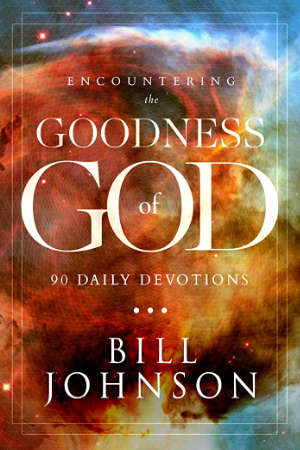
In "Encountering the Goodness of God: 90 Daily Devotions", readers embark on a transformative journey of discovering and experiencing the profound goodness of God. Through these 90 daily devotions, Johnson invites individuals to encounter the life-changing power and presence of God, drawing them closer to His infinite love and grace.
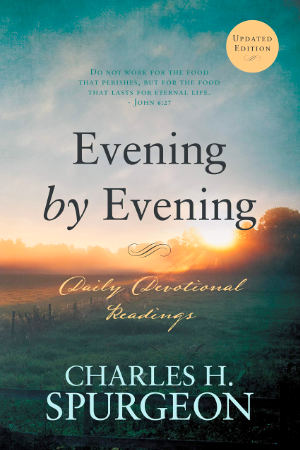
Evening by Evening is a devotional book by Charles Spurgeon, a prominent 19th-century Baptist preacher and writer. This book is a collection of 365 daily readings, each designed to encourage and inspire readers in their daily walk with God.
365 Days of Healing: Powerful Devotions and Prayers To Help You Recover and Keep You Well. Read it over and over. Meditate on its truth until it’s planted down in your spirit. Throughout the day, release your faith by saying the confession at the end of each devotion out loud.
Proverbs is a very different book. It calls us to study, to think, to learn the practical discipline of centering all our thoughts and actions on God. Indeed, one of the main messages of Proverbs is—you’ve never really thought enough about anything.
This devotional is an “open Bible devotional”—that is, you will need to keep your Bible open, on your lap or on your screen, as you use these studies. You’ll be asked questions that bring you to examine and think hard about the text.